


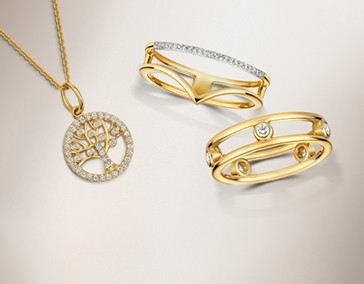


Please note: natural gemstones are unique and may vary slightly in colour and appearance.
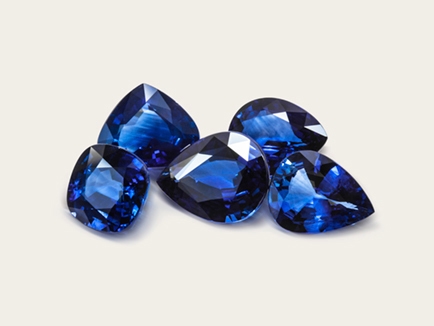
Sapphire is a precious gemstone that primarily comprises the mineral corundum. It also contains trace elements such as titanium, iron, chromium, vanadium and cobalt. The presence of these trace elements in varying quantities accounts for the vast range of colours a sapphire might be found in. The blue sapphire, which can be found in a variety of stunning hues, is the most widely known, but sapphire can also be found in a full myriad of colours except red, which is ruby. Sapphire is found in igneous rock, brought to the Earth's surface through volcanic activity. Sri Lanka is renowned as a historic source of rich, deep blue sapphire. Other significant locations include East Africa and Madagascar, where sapphires can be found in a broader range of colours. Blue sapphire is the birthstone for September and is the gemstone that celebrates the 5th and 45th wedding anniversaries. It is said to symbolise wisdom and virtue, and is commonly associated with royalty. Sapphire measures nine on the Mohs scale, coming second only to diamond. This attribute, combined with its remarkable beauty and range of colour, makes it ideal for use in jewellery.
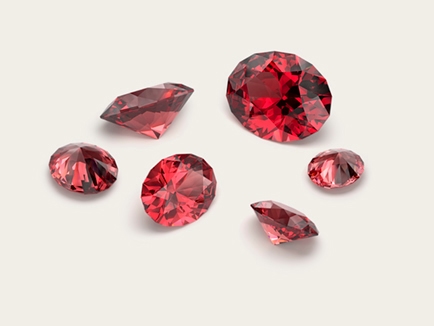
Ruby is a precious gemstone often found in the host rock, marble. Like sapphire, it is also from the corundum mineral family. The magnificent red hues of this stunning gemstone come from the presence of the element chromium. Highly prized stones have been found in Myanmar, but Thailand and Mozambique are also notable sources amongst other countries. Ruby is the birthstone for the month of July, and is the traditional gem gift for 15th and 40th wedding anniversaries. It is also said to represent love, making it an ideal gift for celebrating any romantic occasion. Ruby, like sapphire, measures nine on the Mohs scale, making it very durable and ideal for use in jewellery. Although the crystal can be found in varying shades of red, the most valuable hue is said to be pigeon blood red, which is a deep, vibrant crimson shade.
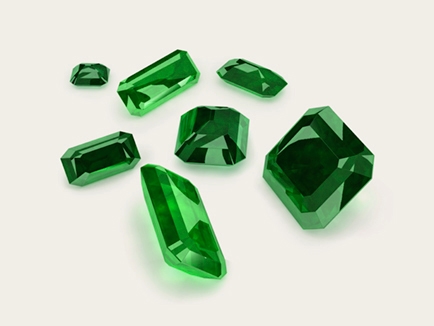
Emerald is classed as a precious gemstone belonging to the beryl family. Its distinctive green colour comes from the presence of chromium, vanadium or both. Emeralds are mined worldwide, but Colombia, Brazil, and Zambia are currently the most significant sources of the gemstone. Emerald is the birthstone for the month of May, and is the traditional gem gift for a 20th or 35th wedding anniversary. The gemstone is characterised by its stunning array of hues and relatively noticeable natural inclusions, which contribute to its individuality. It is usually evaluated using the naked eye rather than under any magnification, and stones without inclusions are extremely rare and valuable. It is common practice within the jewellery industry for both natural and synthetic emeralds to be treated with oil, as this process acts to seal any open fractures that may be present, improving the stone's appearance. Emerald measures between 7.5-8 on the Mohs scale of hardness, and being a softer mineral with distinguishing inclusions, it should be treated with care when set in jewellery.
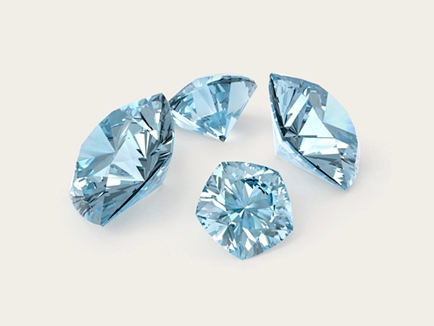
Aquamarine is classified as a semi-precious gemstone and is a variety of the beryl mineral. Like emerald, it measures 7.5-8 on the Mohs scale of gemstone hardness. Its beautiful blue colouration results from the presence of iron. Although deposits of the gemstone can be found across the globe, the most significant source of it is Brazil. It is the birthstone for the month of March, and is typically used to celebrate a 19th wedding anniversary. Aquamarine can be found as an extremely pale gem with just the merest hint of blue, or with a vibrant turquoise colouration reminiscent of the sea, hence its name. These deeper coloured gems are highly prized, especially if they are transparent. Although they are from the same family, aquamarine is far less included than emerald, which makes it more stable as a gemstone. It is also more common, making it a more affordable gemstone than emerald.
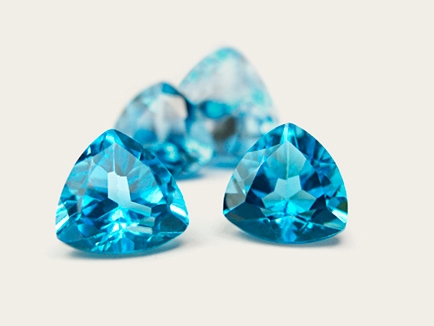
Topaz is a silicate mineral made of aluminium and fluorine. In its natural state, topaz is commonly colourless, although, due to trace element impurities, it can be found in a range of beautiful colours. Natural topaz in the desired gem quality and colour is quite rare. Therefore, the gemstone is typically treated with heat or radiation to achieve its varied spectrum of colours, including rich blues, reddish oranges, pale greens, pinks and purples. Topaz can be found across the globe, but the most significant deposits are found in Brazil. It is the birthstone for November, and is the gemstone associated with a 4th wedding anniversary. Topaz is high on the Mohs scale, measuring eight, making it a popular choice for use in jewellery, being both durable and affordable. With their brilliant clarity and dazzling spectrum of colours, these gemstones are hard to resist.
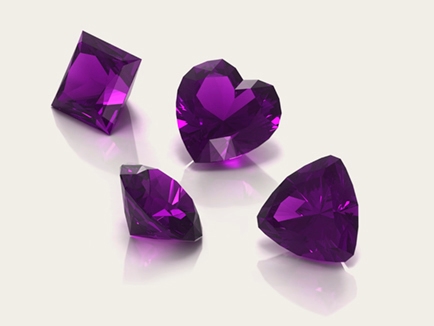
Amethyst is a variety of the mineral quartz, and its gorgeous purple colour results from the inclusion of iron impurities. It is February's birthstone and is the gemstone used to celebrate a 6th and sometimes 17th wedding anniversary. Historically, it was favoured amongst the nobility for its rich, deep violet hue and natural clarity. Large crystals were cut and polished into magnificent gems to adorn important items such as necklets, tiaras and crowns. It remained extremely valuable until the discovery of significantly large deposits of the gemstone in Brazil in the 19th century, resulting in an abundance of available amethyst on the market. Nevertheless, it remains a popular choice for jewellery, measuring a seven on the Mohs scale.
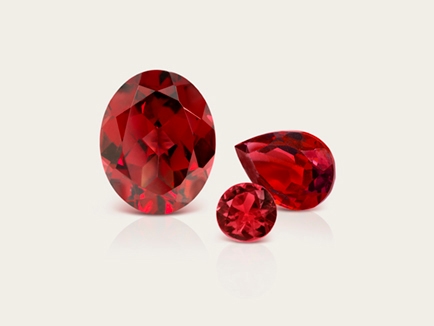
Garnet is formed of various silicate minerals and comes in a kaleidoscope of colours, although red is especially popular for use in jewellery. A few well-known varieties of garnet include demantoid and Tsavorite, both green, and rhodolite, a purplish-red. This beautiful gemstone can be found worldwide but is mined abundantly in India, Africa, Russia, and South America. Garnet is the birthstone for January, and is the traditional gift for a second wedding anniversary. It is a popular choice for jewellery, especially for those who love its vibrant, rich red hues, as it is more affordable than ruby and therefore a good alternative. It measures 6.5-7.5 on the Mohs scale of hardness.
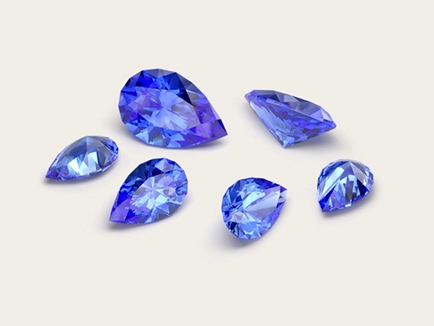
Tanzanite is a variety of the mineral zoisite, and when cut into a gemstone, it displays a breathtaking violet-blue hue. Its name comes from the small area of Tanzania where it is exclusively found and mined. In its rough state, Tanzanite has a reddish-brown to clear colouration, its beautiful shades only revealed after the gemstone undergoes heat treatment. It is characterised by its trichroic properties, meaning that it changes colour from blue to violet and even burgundy when viewed within different lights and angles. The darker, vivid tones are the most admired and valuable, but this enchanting gemstone comes in many shades within the blue-purple spectrum. Tanzanite is the birthstone for December and is traditionally gifted to celebrate a 24th wedding anniversary. Although classified as semi-precious, it is highly regarded and ranks among the four precious gemstones in desirability and value. It measures 6.5 on the Mohs scale of hardness.
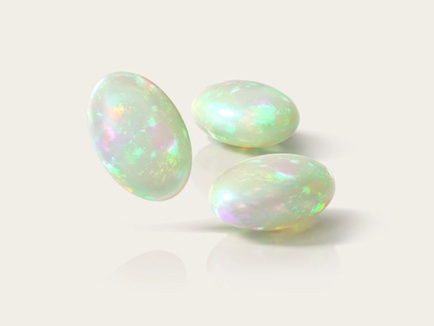
Opal is a hydrated amorphous form of silica. Due to its minimal water content, it is classified as a mineraloid rather than a mineral. Most gem-quality opal is cut and polished into a cabochon, as this shape lends itself to the stone's unusual internal structure. Typically, opals have a background colour of either white, grey, green, or black. The stone's famed kaleidoscope of colour occurs when light bends as it passes through the spheres, creating the incredible visual effect that opal is so well-known for. The rarest and most prized background colour for an opal is black, with the paler whites and greys being far more common and less expensive. Opal is the birthstone for October, and is often gifted to celebrate a 14th wedding anniversary. It measures 5-6.5 on the Mohs scale of hardness, so it is comparatively soft as a gemstone and should be treated with care.
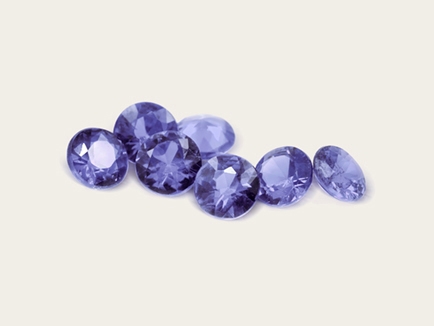
Named after the Greek word for violet, iolite is a mineral whose stunning violet-blue hues come from the presence of iron. To geologists, it is known as cordierite. It is commonly found in alluvial deposits, with significant quantities of the gemstone coming from India, Sri Lanka, Brazil, Myanmar and Zimbabwe. Iolite is characterised by its pleochroism, meaning it changes colour depending on the angle from which it is viewed. This can present a challenge to the lapidarist, as the stone must be cut in a certain way to achieve its optimum colour. Iolite measures 7-7.5 on the Mohs scale, but can be prone to fracture, so for use in jewellery it is most suited to earrings, pendants and brooches. It is typically transparent, often untreated, and can be faceted into exquisite gemstones at affordable prices. Iolite is the 21st wedding anniversary gemstone.
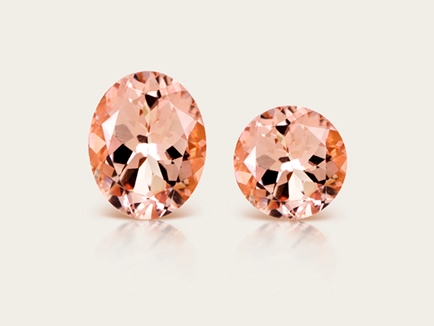
Morganite is a semi-precious gemstone, originating from the beryl family. It owes its renowned peachy-pink colour palette to the presence of manganese, and to a smaller extent, iron. Like iolite, it is characterised by pleochroism, making it a challenge for the stone cutter to achieve the optimum balance of colour. It was first discovered in 1911 in Madagascar, but is now mined from significant deposits in Brazil. Morganite measures 7.5-8 on the Mohs scale and is often found with few inclusions in the rough, making it optically clean and physically strong. It is a stunning choice for use in jewellery and is the traditional gemstone used to celebrate a 9th wedding anniversary.
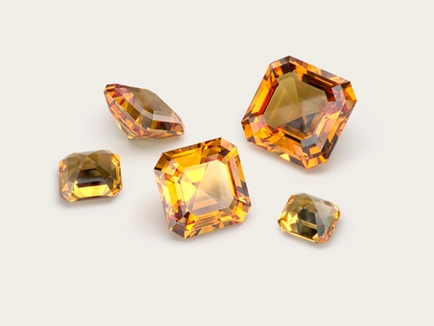
Citrine is a variety of quartz whose trace amounts of iron, enhanced through heat treatment, give it its rich golden-yellow hue. It can be found in a wide range of gloriously sunny shades, varying from lemon yellows to warm oranges, exuding emotions of joy. Deposits are found across the world, but these gemstones are mined in abundance in Brazil. It is the birthstone for November and is typically gifted to celebrate a 13th wedding anniversary. Citrine measures seven on the Mohs scale; its durability and natural transparency make it a popular choice for a jewellery gemstone.
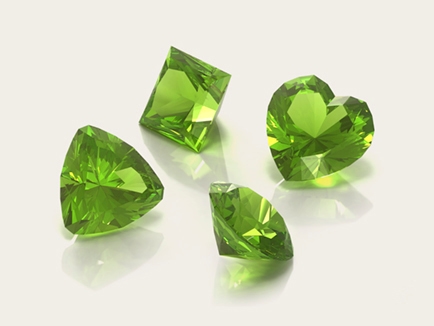
Peridot is a yellow-green transparent variety of the silicate mineral olivine. The presence and concentration of iron in its structure dictate the depth of the gemstone's colouration. Peridot is unusual, as it is one of only a few gemstones that occur solely in one colour; it is also one of only two found in the Earth's mantle, the other being diamond. Notable sources of this wonderful gem include Arizona and, most recently, Pakistan. It has slight pleochroism, meaning it is possible to see different hues from different angles. Peridot is distinctive for its amazing double refraction and fresh, vibrant hues, which, when combined, make it a standout gemstone. It is the birthstone of August, and is the gemstone often gifted for a 16th wedding anniversary. Peridot measures 6.5-7 on the Mohs scale of hardness.
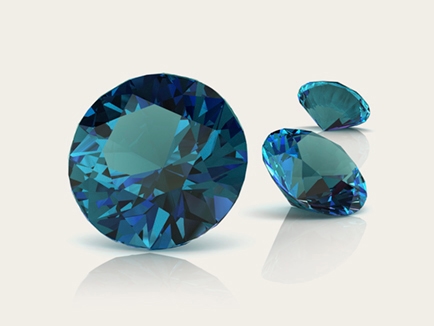
Alexandrite is a rare variety of the mineral chrysoberyl that changes colour depending on the light. In daylight, the gemstone displays a beautiful blueish-green colour, whereas in incandescent light it changes to a vibrant purplish-red. This magical quality has led many to describe alexandrite as 'emerald by day, ruby by night'. Alexandrite was initially found in Russia and named after Tsar Alexander II. This first source produced gems of exquisite quality, rivalled only by a Brazilian source that is now almost depleted. However, there are also sources of alexandrite in India, Madagascar, Tanzania and Sri Lanka, and larger stones can be extremely valuable. Alexandrite is one of the birthstones associated with the month of June, and is the traditional gemstone gift for a 55th wedding anniversary. It measures 8.5 on the Mohs scale of hardness.
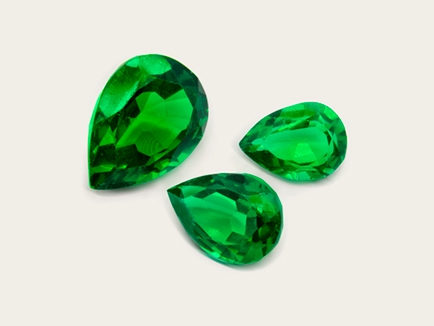
Tsavorite is a grossular garnet first discovered in Tanzania by British gem prospector and geologist Campbell R. Bridges. Now mined in both Tanzania and Kenya, this calcium-aluminium garnet gets its distinctive green colour from trace elements of chromium and vanadium. Tsavorite gained notoriety in 1974 when Tiffany launched a marketing campaign promoting the beautiful gemstone. It measures 7-7.5 on the Mohs hardness scale, and is ideal for jewellery as it is often transparent, and has good dispersion and brilliance. Larger, clean gems over a carat size are rare and command high prices, whereas smaller gems are found in abundance and are more affordable. These factors make it a popular alternative to emerald.
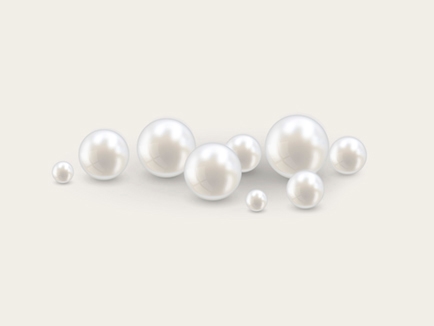
Freshwater pearls are composed of the organic material calcium carbonate. They are cultured, meaning a foreign body is planted within the mollusc by human intervention, rather than forming naturally when a grain of sand enters a living shelled mollusc. As the name suggests, freshwater pearls are grown in river mussels rather than in the saltwater seas. The two most significant sources are China and Japan, while saltwater pearl farms are predominantly located in the oceans around Australia, French Polynesia, and the Philippines. Pearls are relatively soft, measuring only 2.5–4.5 on the Mohs gemstone hardness scale. They should be treated with care, as they can easily be damaged by knocks or chemicals found in beauty products and perfumes. Pearls are the birthstone for June and are traditionally given to celebrate both 3rd and 30th wedding anniversaries.
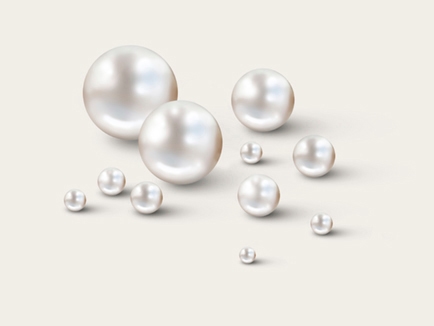
Like all pearls, an Akoya pearl is composed of the organic material calcium carbonate. It is a particularly sought-after cultured pearl, grown in a small oyster called Pinctada fucata martensii in the relatively warm salt waters of Japan. ‘Cultured’ means that a foreign body is planted within the mollusc by human intervention. A tiny round bead is inserted into the reproductive organ of the oyster, prompting it to secrete nacre, which gradually builds up in silky layers to form a lustrous pearl. In Akoya pearls, the perfectly round bead ensures the nacre develops into a uniform, spherical shape. Because Pinctada fucata martensii is a naturally small oyster, the resulting pearls are typically no larger than 8mm. Akoya pearls over 10mm are extremely rare and highly prized.


