


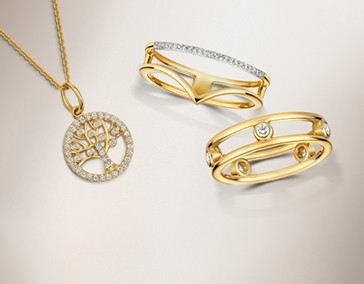


Natural Diamonds
A diamond is a gemstone which predominantly comprises the solid formation of the element carbon. It is the hardest naturally occurring substance. There are now both natural and manmade diamonds.
Natural diamonds occurred due to the crystallisation of billions of carbon atoms in the far, distant depths of the earth.
These depths reached up to some 150 miles beneath the earth’s surface, where the combination of intense pressures and temperatures, over millions and even billions of years led to the creation of diamond crystals.
The crystals are often octahedral in shape.
These crystals were eventually forced closer to the earth’s surface through volcanic activity and are found in rock called kimberlite. Kimberlite is most commonly formed in a vertical direction and therefore referred to as kimberlite pipes. These are the most significant source of natural diamonds.
Around 15% of Kimberlie pipes across the world contain diamonds but of these only 1% are economically viable. This fact alone demonstrates the rarity of natural diamonds.
From a geological perspective, natural diamonds are found in two environments. The first as previously mentioned are the kimberlite pipes, the second are known as placer deposits and are where erosion of kimberlite has occurred causing diamond crystals to filter into streams, rivers and the sea.
From a geographical point of view, the 5 top producers of gem quality diamonds are: Russia, Botswana, Canada, Democratic Republic of Congo, and South Africa.
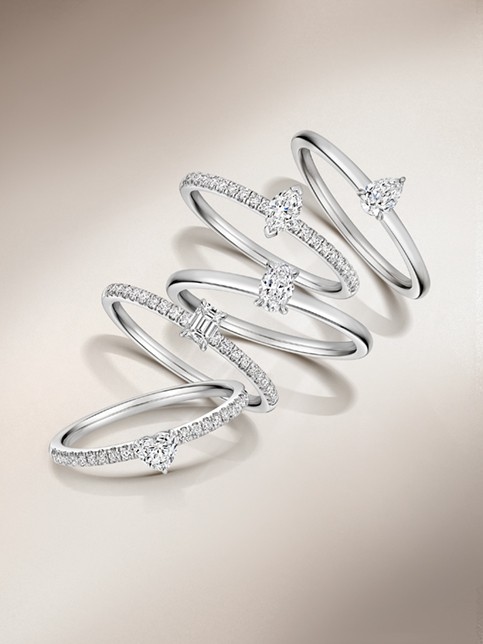
Lab Grown Diamonds
Lab grown diamonds have the same chemical & physical properties as natural diamonds.
The differences between lab grown diamonds and natural diamonds are the methods, environments and time frames in which they were forms.
Lab grown diamonds are therefore real diamonds. The two different types of lab grown diamond are distinguished by the different methods by which they are grow.
The first is called HPHT and stands for High Pressure & High Temperature.
The second is the CVD method and is the more recent method of making diamonds. CVD stands for Chemical Vapour Deposition.
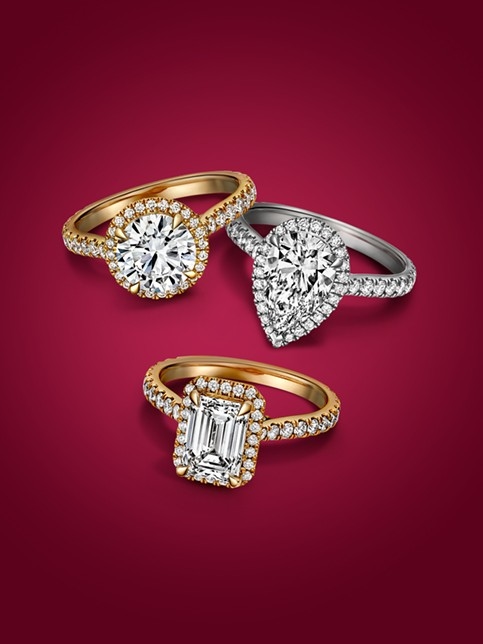
How to distinguish Natural Diamonds from Lab Grown Diamonds
As the chemical and physical properties of natural and lab grown diamond crystals are identical, when a gem diamond is faceted, so too are their optical properties.
It is impossible to distinguish natural diamonds from lab grown diamonds with the naked eye or using a 10x loupe or even with a microscope. Lab grown diamonds will test as diamonds using a conventional diamond tester.
The only way to differentiate is to use a specialist machine which performs a variety of tests and analyses the growth patterns of diamond and is able to determine if it has taken millions of years to have organically & slowly grown within the earth or a few weeks to have been created in controlled factory conditions.
HPHT diamonds are characterised by distinguishing internal graining, uneven colour distribution, metallic flux inclusions, unusual fluorescence colours and patterns.
Some of the differentiating features of CVD diamonds are occasional dark pinpoint inclusions, banded strain patterns, unusual fluorescence colours and patterns.

What is Diamond Shape?
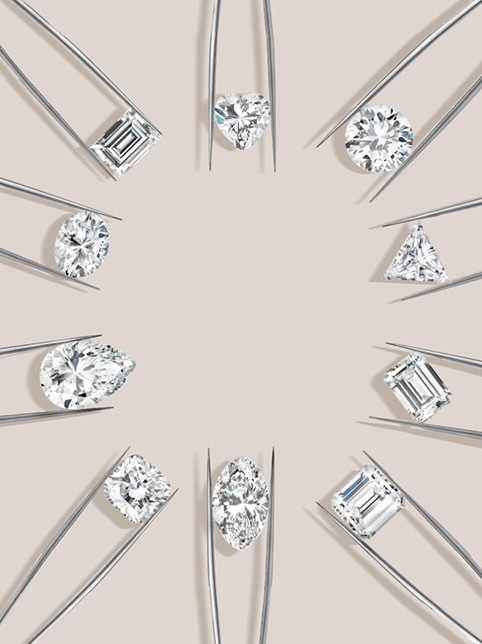
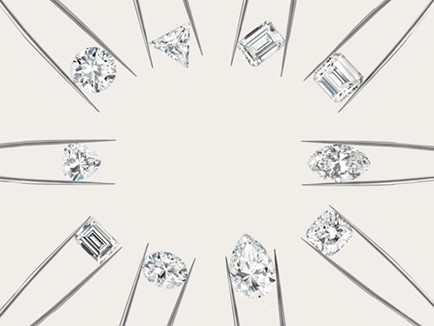
Gem quality diamonds can be cut in a variety of diverse shapes to optimise their individual sparkle and enhance their play of light, just as nature intended.
There are two different cuts: Brilliant cut, which exudes intense sparkle, and Step cut, which emphasises impeccable clarity. Within these two categories of cut, there are a variety of diamond shapes.
Some examples of Brilliant cut shapes are Round, Oval, Cushion, Princess, Heart, Radiant, Trilliant & Heart. Whereas, Emerald cuts, Asscher cuts and Baguettes are all categorised as Step cuts.
Here, we explore the nine most popular diamond shapes featured in Diamonds & Co jewellery.
The 4Cs of Diamonds
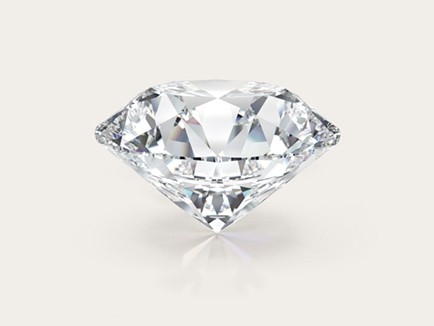
A diamond's cut refers to how well the stone's facets play with light, and the balance of proportions the diamond cutter produces within the stone. The better the arrangement and alignment of facets, the more it impacts the resulting cut and, hence, the more beautiful the diamond.
Round brilliant-cut diamonds are graded on a scale from Excellent to Poor. An Excellent cut grade means the stone has optimum brilliance, sparkle and fire. Therefore, a great deal of emphasis is placed upon a stone's cut and the skilful craftsmanship the diamond cutter is able to achieve.
For other diamond shapes, the cut is more subjective. Fancy shapes should have Excellent or Very Good symmetry and polish grades, as these factors, combined with the other statistics, contribute to their finished assessment.
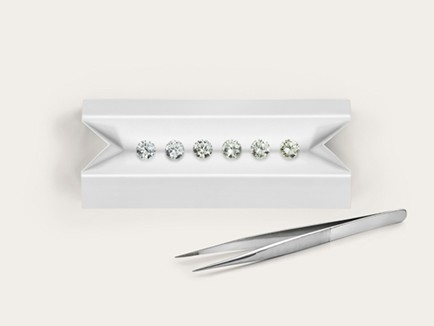
Diamonds are either described as colourless or fancy coloured. Colourless or white diamonds are graded on a scale from D (completely colourless) to Z (yellow or brown-tinted). The higher the grade, the less colour there is, and the rarer the diamond. A diamond with a colour grading of D, E or F is described as Colourless, with G, H, I & J referred to as near Colourless. Anything lower will have a yellow or brownish tint, which is caused by traces of nitrogen.
Diamond clarity refers to the stone’s purity in terms of internal and external blemishes and inclusions (imperfections) and is graded qualitatively by gemmologists, on a sliding scale, using 10x magnification. Blemishes and inclusions occur naturally as the diamond grows deep within the earth. The fewer the inclusions, the higher the grade.
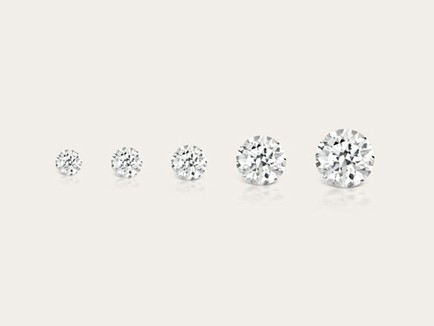
Carat is the unit of weight that diamonds and precious gemstones are measured in (not to be confused with “karat”, which is the gold measuring unit). Usually abbreviated to “ct” when written, a carat equals 0.20g, or a fifth of a gram.
Diamonds weighing less than one carat are often referred to by points, where one point is equivalent to 0.01cts. Therefore a 0.50ct diamond is also called a 50 pointer.
Diamonds Frequently Asked Questions
What is a diamond?
A diamond is a gemstone that predominantly comprises the solid formation of the element carbon. It is the hardest naturally occurring substance known to man. There are now both natural and lab-grown diamonds.
Where are diamonds found?
From a geological perspective, natural diamonds are found in two environments. The first are kimberlite pipes, and the second are known as placer deposits, where erosion of kimberlite has occurred, causing diamond crystals to filter into streams, rivers and the sea. Geographically, the top five producers of gem-quality diamonds are Russia, Botswana, Canada, the Democratic Republic of Congo and South Africa.
How are diamonds formed?
It is essential to know that there are both natural and lab-grown diamonds. Natural diamonds were formed millions of years ago in the far depths of the Earth, where carbon was subjected to huge temperatures and pressures. The crystals were then forced towards the Earth’s surface as a result of volcanic activity. With more recent technologies, it is now possible to grow diamond crystals in laboratory conditions by mimicking the pressures and temperatures that form natural diamonds and subjecting carbon atoms to these.
How are diamonds cut?
Historically, diamonds are cut using specialist equipment and tools by highly skilled artisans. The rough diamond crystal is first analysed to determine the best yield. Traditionally, this would have been done by eye, but with more advanced technologies, a Sarin machine is commonly used. The stages of cutting are cleaving & sawing, bruting, and finally polishing. Each tool used throughout the process is infused with diamonds, as they are the only substance hard enough to cut through other diamonds. Cleaving is a technique that splits the diamond at a point of weakness. If no weakness is present, a laser or a diamond-impregnated saw may be used. Following this, the craft of bruting then applies the girdle to the diamond. Lastly, the stone is brought into contact with a spinning disc infused with diamond powder, which fashions the facets onto its surface. The polisher achieves the finished look by individually polishing the various angles of the diamond, accomplishing the perfectly reflective surfaces indicative of these beautiful gems.
Why are diamonds expensive?
Natural diamonds are a rare and finite resource; mining them is extremely costly. Of the diamonds mined, only about 20% are of gem quality. The vast majority are considered to be of industrial quality. Lab-grown diamonds are a more affordable option. Being manmade, they do not incur the same mining costs as their natural counterparts.
How much are diamonds worth?
Natural diamonds are priced according to the industry standard Rapaport list, which can fluctuate weekly and is calculated according to Martin Rapaport’s in-depth research, analysis, and methodology. For the past 35 years, natural diamonds have increased in value by 3% per annum, and this trajectory is likely to continue.
Lab-grown diamonds offer a more affordable alternative to natural diamonds, making luxury accessible without compromising quality.
What are the 4Cs of diamond grading?
The '4Cs' of diamond grading are: cut, colour, clarity and carat weight. To learn more about these, please click here.
What is the difference between natural and lab-grown diamonds?
Natural diamonds take millions of years to form under immense temperatures and pressures deep within the Earth’s crust. Conversely, lab-grown diamonds can be manmade in a matter of weeks under controlled factory conditions. It is important to remember that natural and lab-grown diamonds have the same chemical and physical properties.
How can I tell if a diamond is real?
The best way to establish whether a diamond is real or not is to ask an expert to examine the stone using a 10x loupe. They will check factors such as the cut's precision, the condition of the girdle and the refractivity of light through the diamond. Natural inclusions within a diamond are also a good indicator of the stone's authenticity. Most jewellery shops possess a small handheld machine that can measure a stone's thermal and electrical conductivity for identification. It is essential to measure the electrical conductivity because moissanite, a common diamond simulant, has the same thermal properties as a diamond. A visual examination should also always be carried out. More sophisticated, specialist equipment is needed to distinguish between natural and lab-grown diamonds. It is not possible to tell the difference from a visual examination, as they are optically identical.
Are your diamonds certified?
Our certificated diamond jewellery is clearly marked, and these items are supplied with either an IGI or a GIA certificate.
Are your diamonds ethically sourced
At Diamonds & Co., we adhere to the Kimberly Process and United Nations resolutions, confirming our diamonds are free from funding conflict.
How do I clean my diamond jewellery
Always start by filling a bowl with warm water. Do not be tempted to clean any jewellery under a tap of running water in case the article falls down the plughole! Add some washing-up liquid to the water and submerge the piece for around 10 minutes to allow any dirt to soften. Then, using a soft toothbrush, gently sweep across the piece, teasing out the loosened dirt particles. Refill the bowl with fresh water, rinse the article, then dry using a lint-free cloth.
Important things to note:
- When cleaning earrings, it is best to remove any fittings first to allow easier access to the back of the earring.
- When cleaning bracelets, take care to allow the bracelet to maintain its natural shape.
- For pendants, if the piece is still attached to the chain, take care to make sure it does not become tangled.


