




Buying an Engagement Ring
01.Set a budget
02.Choose a setting
03.Choose a diamond
04.Purchase
05.Propose
01.Set a budget
02.Choose a setting
03.Choose a diamond
04.Purchase
05.Propose
01.
Set a Budget
There is no set figure that you must spend. The three-month salary guide is now considered a very outdated benchmark!
Consider what you can afford, and remember to factor in any other financial commitments you may have.
You may wish to take advantage of our finance options, so think about how much finance you can realistically afford if you don’t have enough to pay for a ring outright.
Balance these considerations with what your fiancé would like, along with their expectations and style preferences.

02.
Choose a Setting
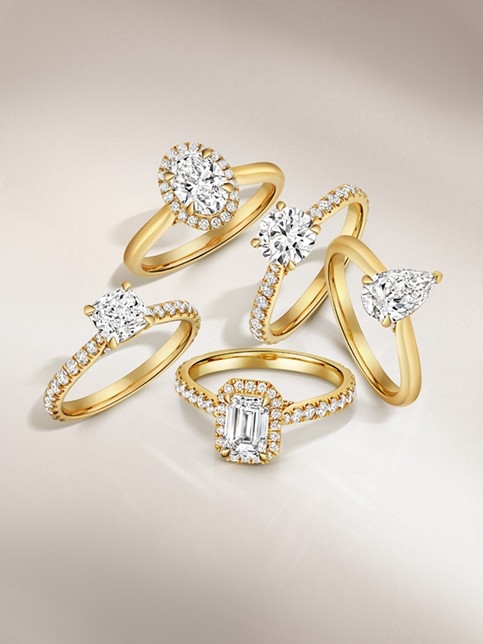
There are many different setting styles, ranging from classic solitaires to vintage-inspired designs. When selecting your perfect ring setting, you should consider style preferences and personal tastes, alongside practical factors such as the recipient’s lifestyle. Some styles are more robust than others.
Also, be aware that styles such as the halo and brilliant ranges can deliver bigger overall looks, which may help you achieve more for your budget. Below, you will find the different settings we offer at Diamonds & Co.
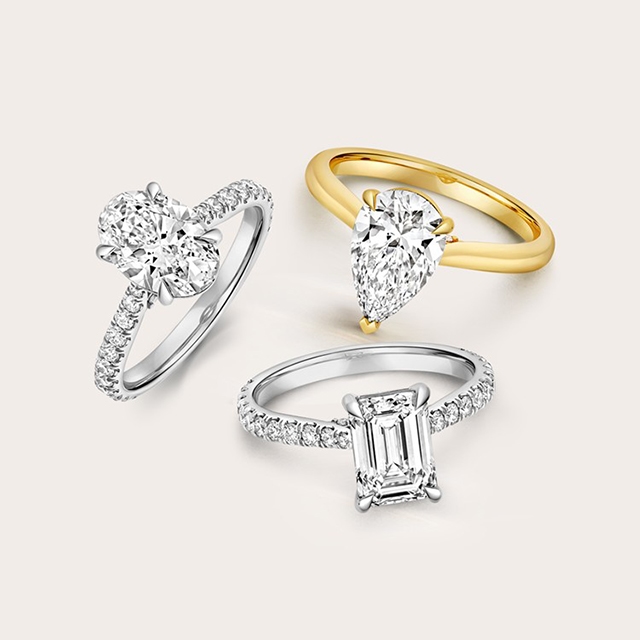
Solitaire settings are favoured for their classic simplicity and for placing the spotlight entirely on the stone itself. A solitaire engagement ring features a single diamond, highlighting the elegance and beauty of the gem regardless of its shape. Solitaires can be claw set, with variations in the number and orientation of the claws, or crafted in rub-over or partial rub-over styles. In every case, the aim is to showcase the natural beauty of the single stone.
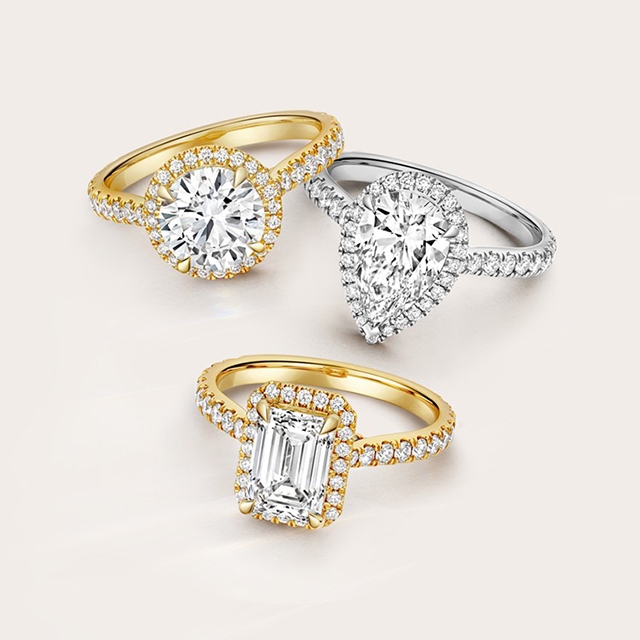
In a halo setting, the centre diamond is encircled by a fine surround of dainty diamonds that follow its shape. Depending on their size and ratio to the centre stone, these smaller diamonds can play a significant role in working with the central gem to create the impression of a single, larger diamond. For this reason, the halo style offers a bigger look for a lower budget and is a popular choice. A double halo features two delicate bands of tiny diamonds instead of just one, further enhancing the appearance of size and brilliance.
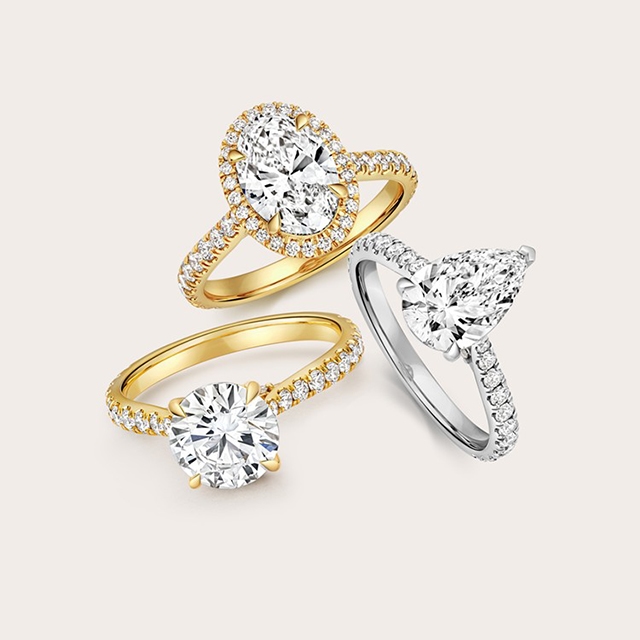
The sections of the band on either side of a ring's centre stone are commonly referred to as the shoulders. Therefore, if a ring is described as shoulder-set, it means there are stones in the band extending from the centre collet. These can be set in a variety of ways, including grain set, cut-down set, channel set, or claw set. Shoulder stones are intended to complement and enhance the centre stone rather than compete with it. At Diamonds & Co., we strive to achieve the perfect balance and proportions to optimise the overall appearance of each beautiful engagement ring.
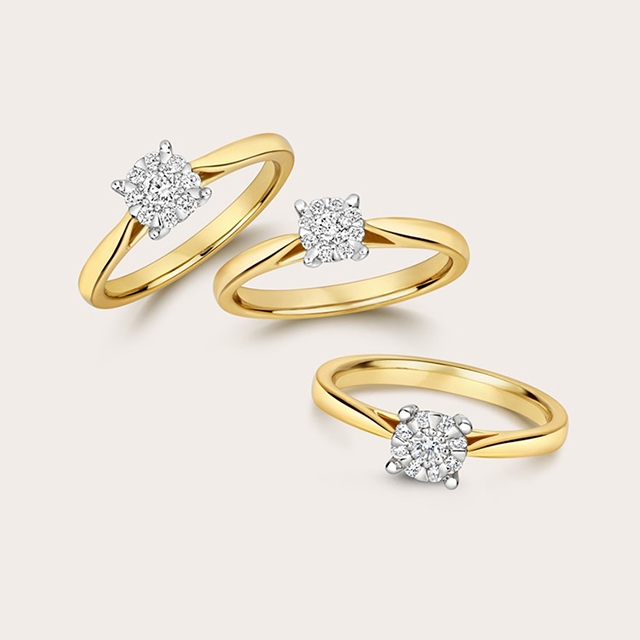
Our Brilliant range of jewellery features illusion-set styles of engagement rings. Illusion-set rings are multi-stone and comprise clever combinations of small, brilliant cut diamonds and brightly cut metal, creating the illusion of one large diamond. This technique achieves a larger but cost-effective look with maximum sparkle and impact.
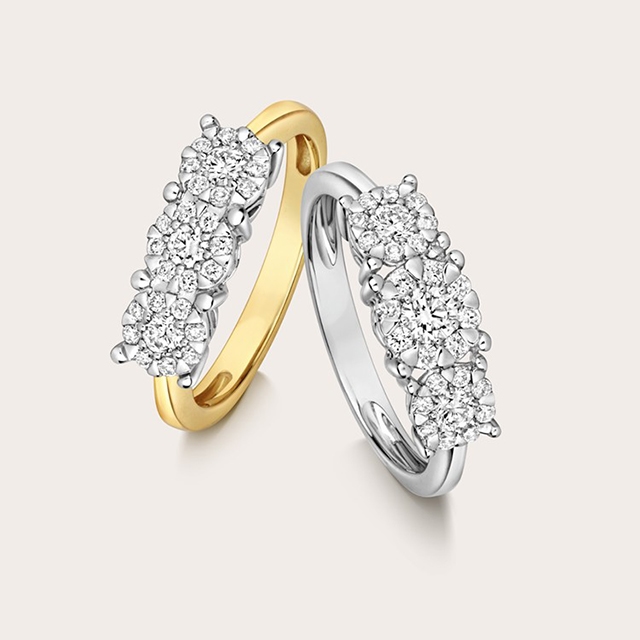
As the name suggests, a trilogy ring consists of three stones, with the centre often being the largest. Alongside the solitaire, it is considered one of the most classic and traditional styles. The look of a trilogy ring can be varied considerably by altering its proportions. A classic and popular ratio is where the centre stone is twice the weight of the sides; for example, a 1.00ct round centre diamond flanked by two 0.50ct round diamonds. If you want the centre stone to have more impact, you could adjust the ratio by reducing the size of the side stones, such as a 1.00ct round centre with two 0.25ct round sides. You could also play with different shapes. For instance, a 1.00ct round brilliant centre paired with pear-shaped or tapered baguette sides is a timeless favourite.
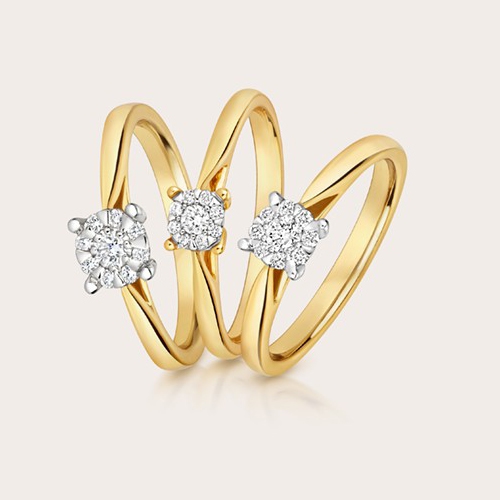
Two-tone rings combine contrasting metal colours to create a refined and distinctive look. For example, a ring may feature a yellow-gold shank, while the collet securing the central diamond is white-gold. Traditionally, centre stones were always set in white metal to ensure the diamond’s natural body colour remained uncompromised. Today, however, it has become popular and widely embraced to set diamonds in yellow or rose gold, offering a warmer, more individual aesthetic to suit the wearer’s personal style.
03.
Choose a Diamond
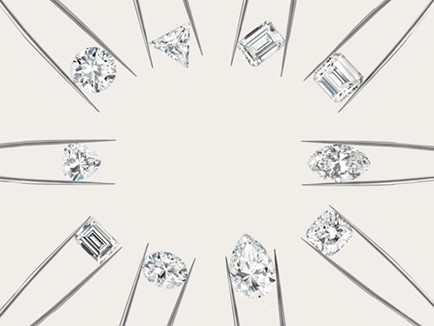
A diamond's cut refers to how well the stone's facets play with light, and the balance of proportions the diamond cutter produces within the stone. The better the arrangement and alignment of facets, the more it impacts the resulting cut and, hence, the more beautiful the diamond.
Round brilliant-cut diamonds are graded on a scale from Excellent to Poor. An Excellent cut grade means the stone has optimum brilliance, sparkle and fire. Therefore, a great deal of emphasis is placed upon a stone's cut and the skilful craftsmanship the diamond cutter is able to achieve.
For other diamond shapes, the cut is more subjective. Fancy shapes should have Excellent or Very Good symmetry and polish grades, as these factors, combined with the other statistics, contribute to their finished assessment.
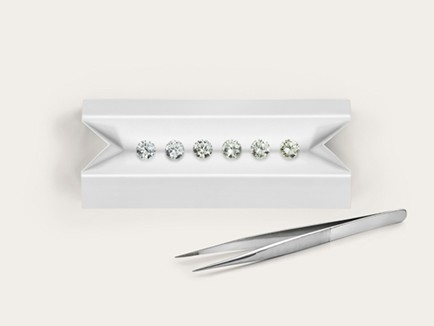
Diamonds are either described as colourless or fancy coloured. Colourless or white diamonds are graded on a scale from D (completely colourless) to Z (yellow or brown-tinted). The higher the grade, the less colour there is, and the rarer the diamond. A diamond with a colour grading of D, E or F is described as Colourless, with G, H, I & J referred to as near Colourless. Anything lower will have a yellow or brownish tint, which is caused by traces of nitrogen.
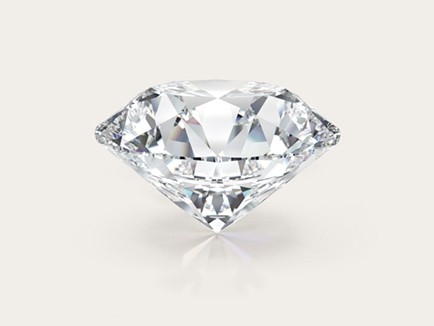
Diamond clarity refers to the stone’s purity in terms of internal and external blemishes and inclusions (imperfections) and is graded qualitatively by gemmologists, on a sliding scale, using 10x magnification. Blemishes and inclusions occur naturally as the diamond grows deep within the earth. The fewer the inclusions, the higher the grade.
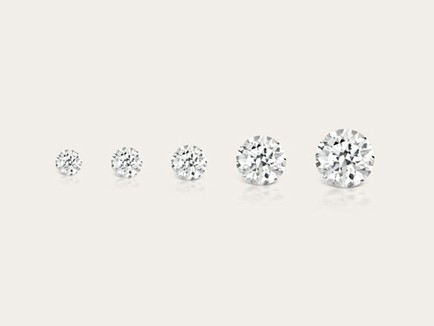
Carat is the unit of weight that diamonds and precious gemstones are measured in (not to be confused with “karat”, which is the gold measuring unit). Usually abbreviated to “ct” when written, a carat equals 0.20g, or a fifth of a gram.
Diamonds weighing less than one carat are often referred to by points, where one point is equivalent to 0.01cts. Therefore a 0.50ct diamond is also called a 50 pointer.


04.
Purchase
Ideally, you will know the required finger size. If not, please refer to our ring sizing guide for assistance.
You will be guided through a series of important decisions when choosing an engagement ring. First, select the precious metal that best reflects your style. Next, decide on your preferred stone: will you choose a natural diamond, a lab-grown diamond, a coloured gemstone, or perhaps a combination of these? You will also want to consider the ring style itself, ensuring it captures your desired look and sentiment. Once you have refined your preferences, balance these choices alongside your budget. You may wish to take advantage of the finance plans we offer.
05.
Propose
Consider when and where you plan to propose, and keep in mind that your chosen ring may be made to order, so allow sufficient time for this. Alternatively, you may prefer to propose with a token ring and then enjoy the experience of selecting the perfect engagement ring together. Whatever your approach, thoughtful preparation is key to ensuring your magical moment ends with that all-important ‘YES’!

Engagement Rings Frequently Asked Questions
How long does it take to produce a made-to-order engagement ring?
Typically, it takes six weeks to make an engagement ring. However, we offer a selection of in-stock items available for delivery within up to two working days, depending on the time the order is placed.
What are the 4Cs of diamond grading?
The '4Cs' of diamond grading are: cut, colour, clarity and carat weight. To learn more about these, please click here.
Are your diamonds ethically sourced?
At Diamonds & Co., we adhere to the Kimberly Process and United Nations resolutions, confirming our diamonds are free from funding conflict.
How do I know my ring size?
Please refer to our Ring Size Guide for information on how to measure your finger size as accurately as possible. It's best to use a special ring sizer tool to give you an accurate, alphabetical measurement. To receive our free ring sizer, please go to Ring Size Guide and fill in your details. We'll send you one free in the post the next day (UK only).
Can I resize my engagement ring?
Yes, we can usually size engagement rings. It will depend on the style of the ring and the number of sizes it needs to be altered. Rings that cannot be modified are clearly marked. For assistance, please contact our customer service by phone or email.
Can I provide my own centre stone?
Unfortunately, not. At Diamonds & Co., we specialise exclusively in selling finished jewellery.
Can I choose a different cut shape for my centre stone that I do not see on your website?
Our rings are made specifically for the diamond shapes we feature. Therefore, it isn’t possible to accommodate a different cut.
What type of packaging do you offer?
At Diamonds & Co., each piece of jewellery is packaged in one of our beautiful, branded boxes and accompanied by a coordinating luxury bag; we can even include a personalised gift note!


